


New SW Machining Centre for Precision Manufacturing
With the installation of a new BA W03-22i machining center from SW, Sutter expands its capabilities for high-precision component manufacturing and supports future production requirements.
- Published:
- Author: Sutter Medizintechnik GmbH
- Category: Inside Sutter | What's happening here
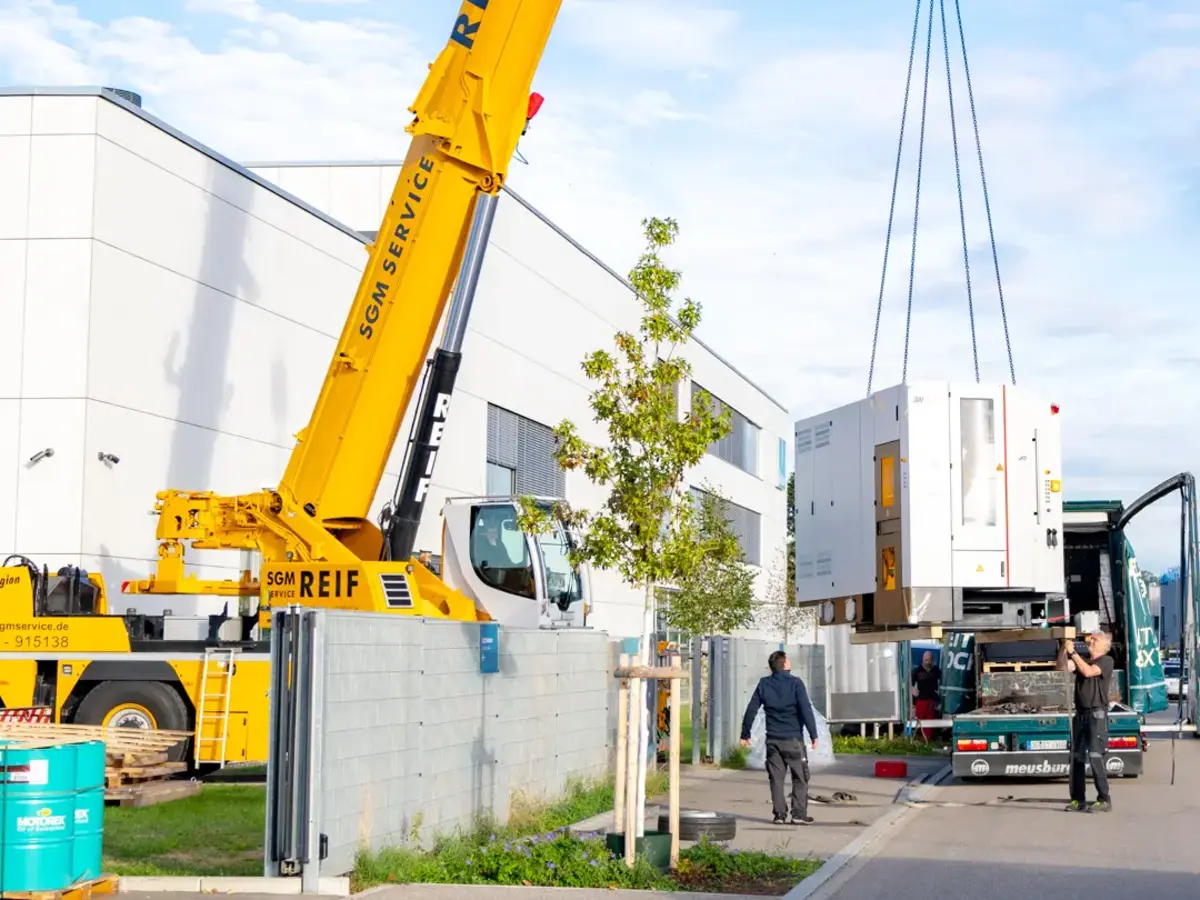
When several tonnes of advanced manufacturing technology are moved across a production site with millimetre-level control, even a routine working day becomes a special occasion. With the installation of a new BA W03-22i machining centre from SW – Schwäbische Werkzeugmaschinen, Sutter is expanding its high-precision component manufacturing capabilities. The new system adds production capacity and supports the continuous development of manufacturing processes for surgical instruments.
A Special Day for Our Production Team
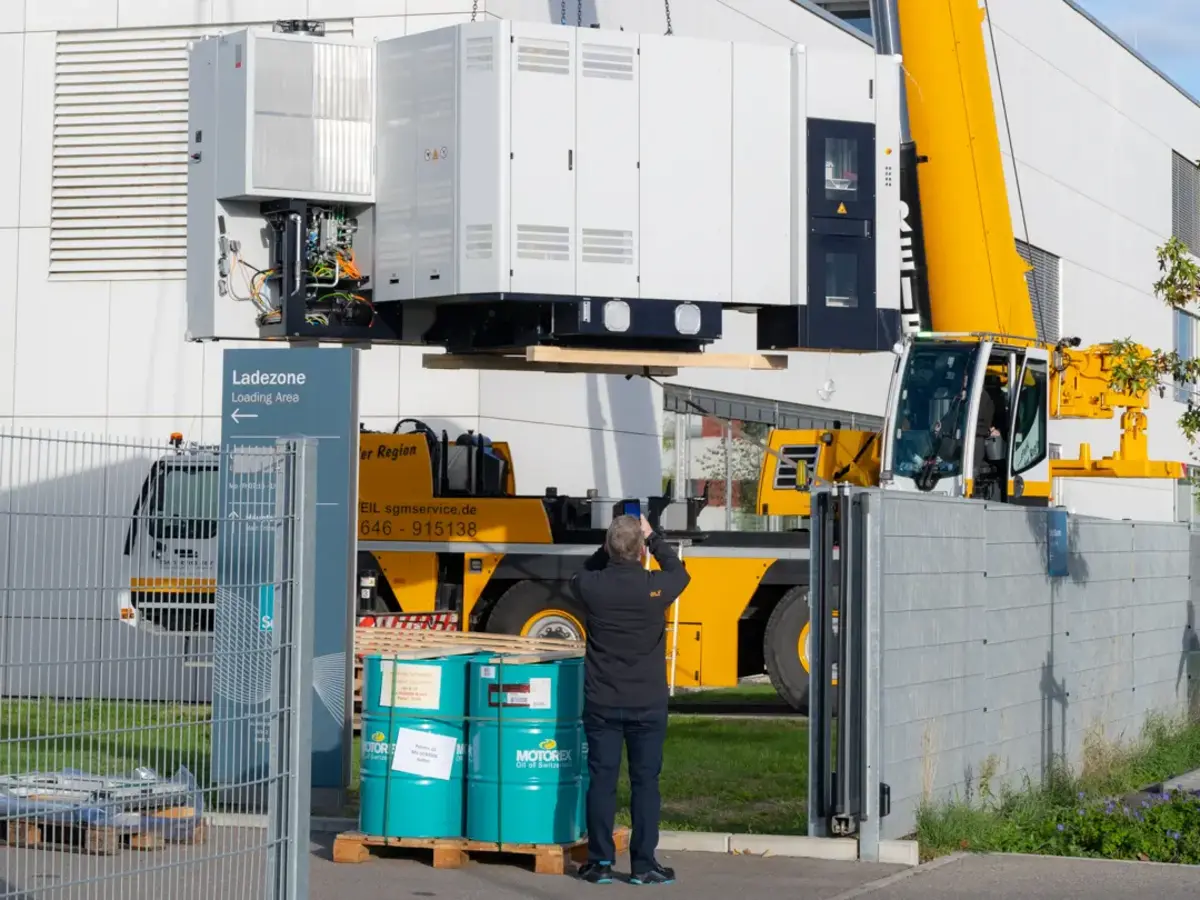
The delivery began with heavy transport. The new machining centre was then unloaded, attached to the crane and moved towards its intended position in a series of carefully planned steps. Because the available space on the production site was limited, the machine, crane and transport vehicle had to be precisely coordinated.
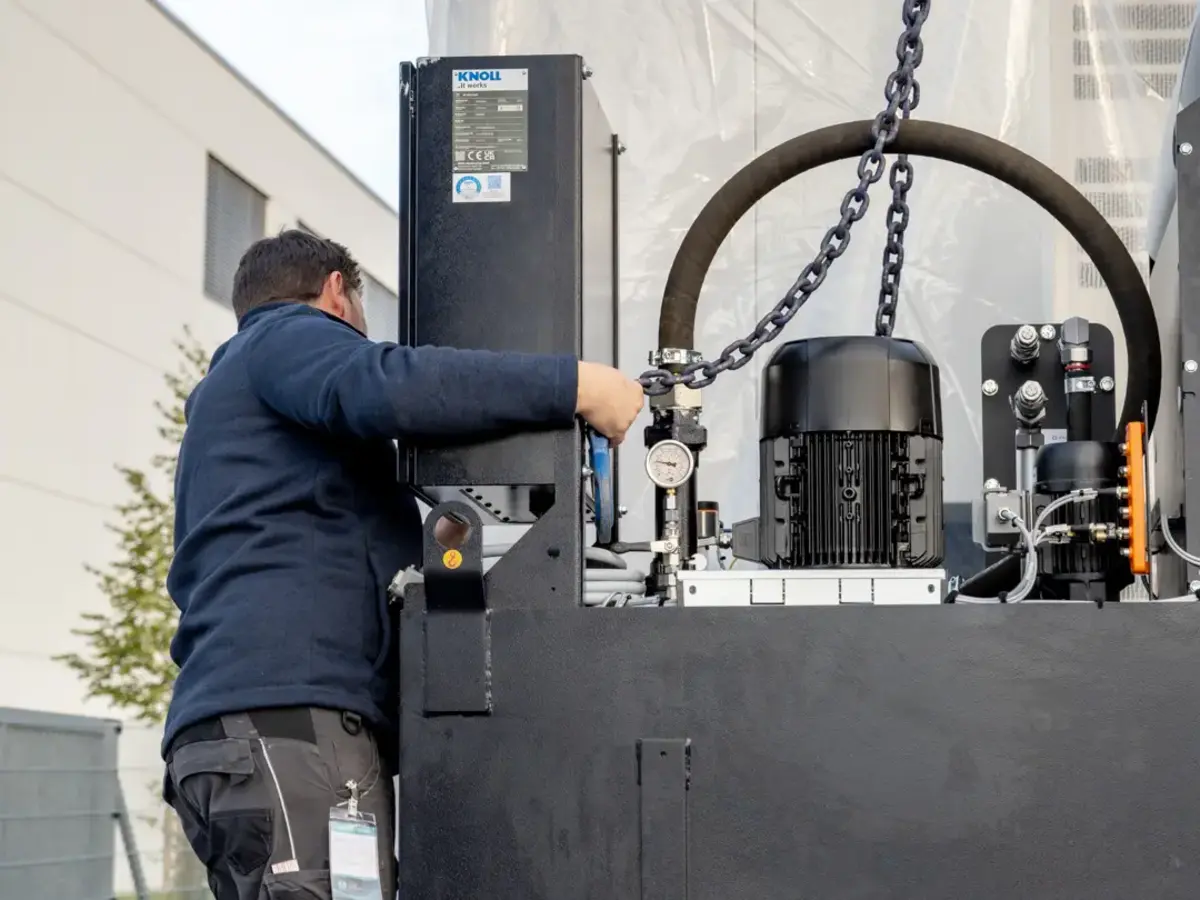
The scale of the equipment made the installation an impressive sight. Size and weight, however, were only part of the challenge. Every lifting point, movement and manual step had to be prepared and controlled.
The photographs therefore show more than the arrival of a new machine. The images document the combination of technical planning, suitable lifting equipment and practical expertise required before a machining centre can manufacture its first component.
What the New BA W03-22i Machining Centre Does
The BA W03-22i is designed for productive and precise machining processes. Its twin-spindle concept allows two workpieces to be machined in parallel. Linear drives support fast and controlled machine movements, while the overall configuration enables demanding machining operations.
For Sutter, the technical performance of the machine is only one part of the investment decision. The decisive question is how the system integrates into the existing production environment and what contribution it can make there.
The new machining centre adds capacity for manufacturing complex components. Recurring machining operations can be performed automatically and repeatably. The system also provides additional opportunities to organise production workflows efficiently and develop the manufacturing infrastructure over the long term.
The machine is manufactured by SW – Schwäbische Werkzeugmaschinen. Sutter is integrating the machining centre into its own production environment for component manufacturing in the context of surgical precision instruments.
Why Precision Manufacturing Matters for Surgical Instruments
Surgical instruments consist of individual components that must work together reliably. Controlled and repeatable production processes are therefore important from the earliest component manufacturing stages.
Advanced machining centres support the precise production of complex geometries in a consistent form. Automated workflows can perform recurring machining operations and provide stable conditions for subsequent manufacturing and assembly processes.
The new system therefore strengthens an early but essential part of the value chain: the production of components from which surgical precision instruments are subsequently created.
Industrial machining remains part of a broader production process. Individual components only become complete instruments through additional manufacturing, inspection and assembly stages.
Technology Alone Does Not Make a Precision Instrument
An advanced machining centre can perform complex movements precisely and repeatedly. It cannot, however, replace all the experience required in the manufacture and assembly of surgical instruments.
Many production stages continue to depend on specialist knowledge, careful workmanship and a detailed understanding of materials, components and instrument functions. Qualified employees set up processes, monitor production, assess results and contribute their experience to subsequent manufacturing steps.
Sutter therefore does not view automation as the opposite of skilled craftsmanship. Modern machines perform tasks that require repeatability and productive workflows. People contribute experience, judgement and practical expertise.
This combination forms the basis of modern instrument manufacturing: technology creates precise conditions, while skilled employees turn components into carefully manufactured instruments.
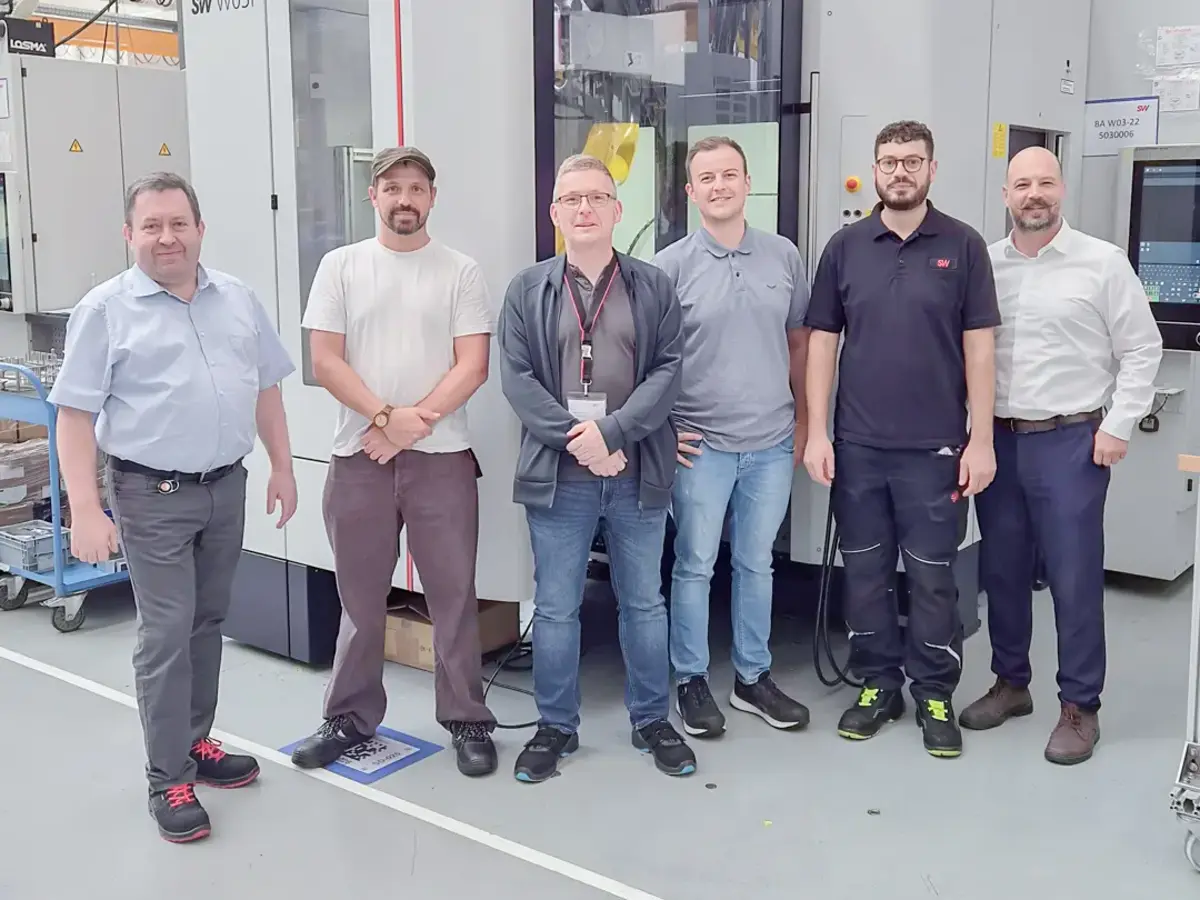
The arrival of the new BA W03-22i was a visible milestone even before commissioning: a complex manufacturing system, a demanding installation and many carefully coordinated steps. What happens after installation is even more important. The machining centre expands Sutter’s component manufacturing capabilities and becomes part of a production process in which advanced technology and qualified employees work closely together. High-quality surgical precision instruments are not created by powerful machinery alone. They are created where automated manufacturing, technical expertise and skilled craftsmanship complement one another.
FAQ about Precision Manufacturing and the New BA W03-22i
The BA W03-22i is a multi-spindle CNC machining center manufactured by SW – Schwäbische Werkzeugmaschinen GmbH. The machine is designed for highly productive and precise machining processes and features, among other things, a twin-spindle concept, modern linear drive technology, and integrated automation.
Sutter will use the new machining centre to manufacture complex, high-precision components. These components subsequently undergo additional production, inspection and assembly processes before becoming part of complete surgical instruments.
A twin-spindle machining centre can process two workpieces in parallel. This supports productive workflows and the efficient manufacture of recurring or comparable components.
Linear drives convert electrical energy directly into linear machine movement. They enable dynamic and controlled movements without requiring conventional mechanical transmission elements for that particular axis movement.
The investment adds capacity for manufacturing high-precision components. It also supports the technological development of Sutter’s production environment and provides additional options for efficient and repeatable machining processes.
No. The machining centre automates defined machining operations, but it does not replace employee expertise. Process setup, monitoring, assessment and subsequent assembly operations continue to require specialist knowledge and careful workmanship.